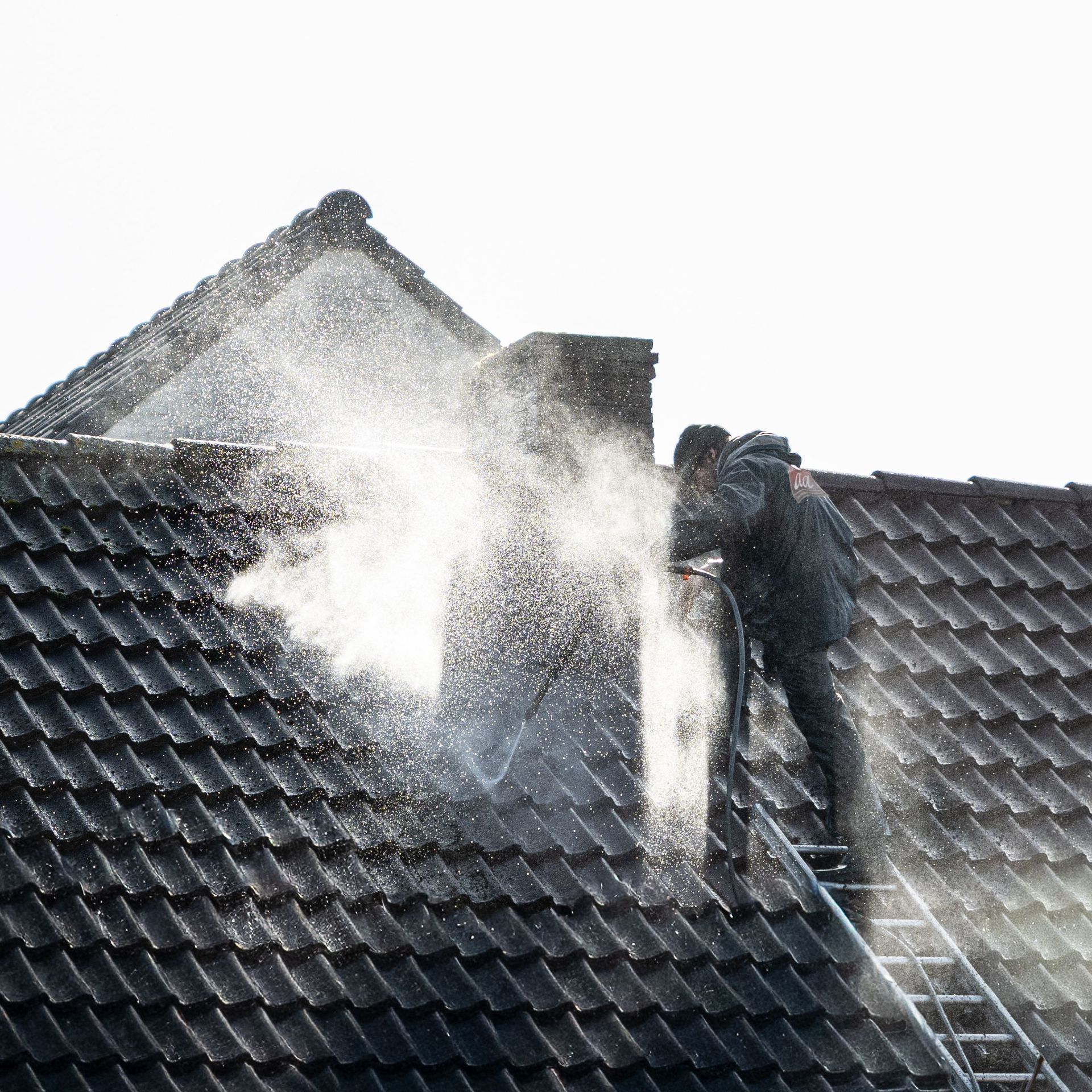
Six Signs Your Southampton Roof Is Overdue a Clean
Your roof rarely gets a second glance until something's clearly wrong. But it drops hints long before that, and if you know what to look for you can catch trouble early. In Southampton, where salt air and damp push moss along fast, spotting the signs matters.
Most of these you can check from the pavement with a cup of tea in hand. No ladders needed. A slow look up at your own house tells you more than you'd think.
The quick answer: Green or black streaks, visible moss clumps, debris in the gutters, bits of moss on the ground, dark damp patches and plants sprouting from the roof are the main signs your roof is overdue a clean. Any one of them is worth acting on before it gets worse.

1. Green and black streaks across the tiles
The first thing you'll usually notice is colour. Fresh tiles have an even tone, and when algae takes hold you get dark streaks and green patches breaking it up. It tends to start on the shaded, north-facing slope.
In Southampton this happens quicker than inland. The humid, salt-laden air off Southampton Water keeps tiles damp, and damp is what algae needs. If your roof has gone patchy and dull, that's the earliest sign it's building up.
2. Moss you can actually see from the ground
Algae stains, but moss bulks up. Once you can pick out green cushions and clumps along the tile edges and in the gaps from street level, there's a fair amount up there. Thin wisps become thick pads surprisingly fast in our climate.
Moss along the ridge line and in the valleys is the bit to watch. Those spots hold the most water, and that's where moss digs in hardest. If you can see it clearly without squinting, it's past time for a clean.
3. Gutters filling with grit and green bits
Have a look at your gutters, or check them next time it rains. Water spilling over the front edge instead of draining is a giveaway. So are little plants or tufts of moss growing along the top of the gutter itself.
That debris almost always comes off the roof. As moss loosens up top, it washes down and settles in the channels. A gutter that's sprouting greenery is really telling you the roof above it needs attention too.
4. Bits of moss turning up on the ground
Here's one people miss. If you're finding crumbs of moss and grit on the patio, the drive or the path around the house, look up. That material is coming off your roof, especially after wind or heavy rain.
Southampton gets its share of blustery, wet weather rolling in off the coast, and that knocks loose moss down. Finding it scattered below is a clear hint the roof is carrying more than it should.
5. Dark damp patches that linger
After a dry spell, most of your roof should look, well, dry. If parts of it stay dark and wet-looking days after the rain stops, that's moss holding moisture against the tiles like a sponge.
Those permanently damp patches are a problem in our climate. The tiles underneath never get to dry out properly, and constant moisture wears them down and invites more growth. Here's a quick checklist of what to scan for:
- Colour change: streaks and patches that break up the even tone of the tiles.
- Visible clumps: moss you can spot from the ground, thickest on ridges and valleys.
- Overflowing gutters: water spilling over the edge or greenery in the channel.
- Fallen debris: moss and grit collecting on paths, patios and the drive.
- Lingering damp: dark, wet-looking areas that stay put long after rain.
6. Plants taking root up there
The clearest sign of all is when actual plants start growing on your roof. Not just moss, but little weeds, grass or seedlings sprouting from the gaps and the gutter line. That only happens once enough moss and debris has built up to hold soil and seeds.
If you've reached this stage, the roof has been left a good while. It's not an emergency overnight, but it's a strong nudge. And in my experience, a roof that's grown its own garden is one that's been quietly costing the tiles beneath for years.
Frequently Asked Questions
How can I tell if my roof needs cleaning without going up there?
Most signs are visible from the ground: streaks and patches, moss clumps, overflowing gutters, fallen debris and dark damp areas that linger after rain.
Is moss on the roof really a problem or just ugly?
It's both. Moss holds water against the tiles, which speeds up wear and can lead to damp, and clumps break off and block the gutters below.
Why does my Southampton roof grow moss so fast?
The humid, salt-laden air off Southampton Water keeps tiles damp, and our mild winters rarely freeze the moss back, so it grows most of the year.
I found moss bits on my patio. Does that mean my roof is bad?
It's a strong sign. Loose moss falling from the roof, especially after wind or rain, usually means there's a decent build-up up top worth checking.
What happens if I just leave it?
The moss thickens, holds more moisture, blocks gutters and can lead to damp and faster tile wear. Cleaning early is far cheaper than dealing with the damage later.
Spotted any of these on your roof?
Ben's Roof Cleaning works across Southampton and Hampshire, with over 15 years of experience. Get in touch or call 07889 127153
for a free, no-obligation quote.
Catching it early saves you the worst of it
None of these signs mean disaster tomorrow, but they all point the same way. A roof left to grow moss and algae only gets harder and more expensive to put right. Give yours an honest look from the garden now and then, and the moment two or three of these show up, that's your cue to sort it before Southampton's weather makes the job bigger.