Victorian Terraces to Post-War Estates: A Guide to Southampton Roofs
Walk down almost any Southampton street and you'll see the city's history written on the rooftops. Your own home might sit in a Victorian terrace, a 1930s semi, or a post-war estate, and each one asks something different from you when it comes to keeping the roof sound.
Southampton took heavy bombing during the Second World War, so the housing stock is a real patchwork. Old survives next to new all over the city. That mix is part of what makes the place interesting, and it's also why there's no single answer for how to look after a roof here.
The quick answer: Southampton has everything from Victorian slate to post-war concrete tile, and each roof type ages and grows moss differently. A good clean matches the method to the roof, using low-pressure soft washing that clears growth without harming older or more fragile coverings.

1. Why the city ended up with such a mix
Southampton was a major port and a target during the Blitz. Large parts of the city were flattened, including whole residential streets, and the rebuilding that followed ran for years. That's why a bombed gap might now hold a 1950s house sat between two Victorian originals.
For you, that means the house two doors down could have a completely different roof to yours. Age, materials and pitch all vary street by street. And that variety is exactly why a one-size cleaning approach doesn't work here.
2. Victorian terraces and their slate roofs
Areas like Portswood, St Denys and parts of Shirley still have plenty of Victorian terraces. Many started life with natural slate, which is a lovely material but a brittle one, especially once the fixing nails start to corrode after a century of coastal air.
Slate holds algae in its surface texture, and moss loves to root along the laps and ridges. You can't go at old slate with force. It'll crack, slip, or come away entirely, and matching reclaimed slate is neither cheap nor quick.
Gentle is the only sensible way with a roof this old.
3. Interwar semis and their clay tiles
Between the wars, Southampton spread outward with rows of bay-fronted semis, the kind you see across Bitterne, Highfield and Swaythling. These often carry clay tiles, and clay ages well but gets more porous over time.
A porous tile drinks up moisture, and in our damp coastal air that keeps it green for longer. Once moss settles into the gaps between tiles, it lifts them slightly and lets water track underneath. Clearing that growth early keeps small problems from turning into repairs.
4. Post-war estates and concrete tiles
The estates built after the war, places like Thornhill, Millbrook and Weston, mostly went up with concrete interlocking tiles. They're tougher than slate and were cheaper to lay at scale, which suited fast rebuilding.
But concrete tiles have their own weakness. They start with a factory coating that seals the surface, and over the decades that coating wears off. Once it does, the tile turns rough and porous, and moss grips it fast. A lot of these estate roofs are now at exactly that age.
Here's a fact worth knowing. Concrete tiles from the mid-20th century are often reaching the point where the surface has weathered right through, so they hold moss more stubbornly than they did when new.
5. Terraced runs share more than a wall
If you live in a terrace, your roof and gutters are part of a continuous run with your neighbours. Moss and debris don't respect property lines. What builds up three doors along can end up feeding into the flow that passes your gutters too.
That shared setup makes a few things worth keeping an eye on:
- Party wall junctions: the joins between neighbouring roofs collect debris and stay damp.
- Continuous gutters: a blockage next door can back water up toward your section.
- Shared valleys: where two roof slopes meet, moss and leaves gather fast.
- Chimney stacks: older terraces have plenty, and their bases trap moss and grime.
6. Matching the method to the roof
An honest roof clean starts by looking at what the roof actually is. Victorian slate, interwar clay and post-war concrete each behave differently under water and treatment, and treating them all the same is how tiles get damaged.
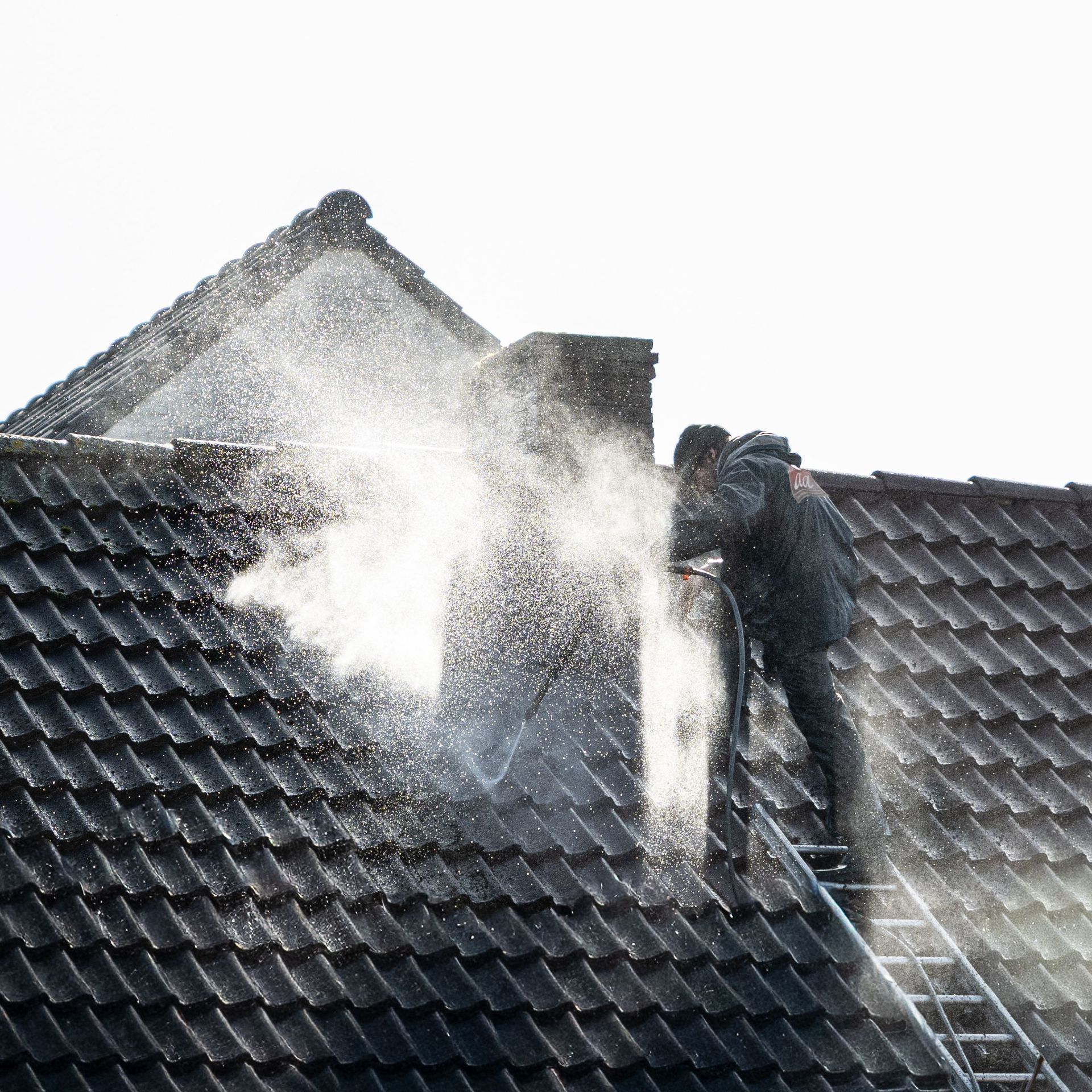
Soft washing suits all three because it relies on a low-pressure flow and a biocide rather than brute force. The biocide kills the moss and algae at the root, and the roof is left to weather clean. No cracked slate, no stripped coating, no water forced under the tiles.
For a city with roofs this varied, that flexibility matters more than most people realise.
Frequently Asked Questions
Can you clean an old Victorian slate roof safely?
Yes, with care. Slate is brittle and old fixings corrode, so low-pressure soft washing is used rather than any high-pressure method that could crack or dislodge it.
Why does my post-war concrete tile roof grow so much moss?
The factory coating on concrete tiles wears off over the decades, leaving a rough, porous surface that moss grips easily. Many Southampton estate roofs are now at that stage.
My neighbour's roof is filthy but mine is clean. Does it matter?
In a terrace it can. Shared gutters and roof junctions mean debris and blockages next door can affect the flow past your own section.
Are clay tiles more delicate than concrete?
They age differently. Clay gets more porous with time and can hold moisture, while older concrete tiles lose their surface coating. Both benefit from gentle cleaning.
Do you need to get on the roof to clean it?
Often the work can be done from the ground or safe access using the right equipment, which reduces the need to walk on fragile older coverings.
Not sure what your roof is made of or what it needs?
Ben's Roof Cleaning works across Southampton and Hampshire, with over 15 years of experience. Get in touch or call 07889 127153
for a free, no-obligation quote.
Old or new, every Southampton roof has its quirks
The scattered ages of Southampton's houses are part of the city's story, from the Victorian streets that survived the war to the estates that rose from the rubble. Your roof carries a piece of that history, and looking after it well means respecting what it's made of. Understand the material, use the right touch, and even a hundred-year-old roof can stay in good shape.